

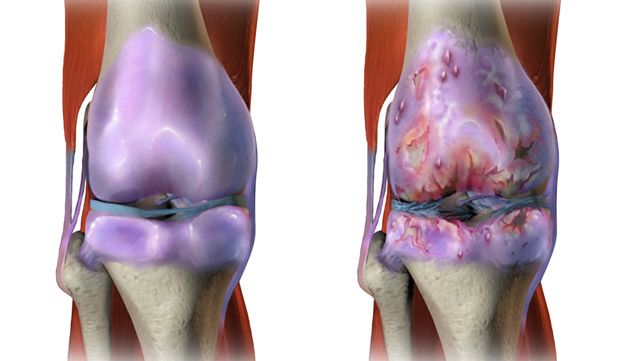
Knee osteoarthritis is one of the most common joint conditions affecting adults, and one of the most misunderstood. A lot of people hear the diagnosis and assume it means an inevitable decline toward knee replacement surgery. That assumption leads to delayed treatment, reduced activity, and a worse outcome than what proactive management actually produces.
Understanding what is happening in the joint, what drives the progression of the condition, and what the current treatment landscape looks like gives you a much more accurate picture of what knee osteoarthritis means for your daily life and your long-term mobility.
What Is Actually Happening in the Joint
Osteoarthritis is a degenerative joint condition that affects the cartilage covering the ends of the bones where they meet at the joint. Cartilage serves as a cushion and lubricating surface that allows the joint to move smoothly under load. In osteoarthritis, that cartilage gradually breaks down, becomes thinner and less smooth, and loses its ability to absorb the forces that pass through the knee during walking, climbing stairs, and other daily activities.
As the cartilage deteriorates, the underlying bone is exposed to more direct stress. The body responds by forming bony outgrowths called osteophytes at the joint margins, and the joint lining becomes inflamed and produces excess fluid. The result is the combination of pain, stiffness, swelling, and reduced range of motion that characterizes knee osteoarthritis in its more symptomatic stages.
The condition develops gradually over years rather than appearing suddenly. Early stages may produce only mild stiffness after periods of inactivity. As cartilage loss progresses, pain during activity becomes more consistent, and in advanced stages pain can occur at rest and at night.
Who Develops Knee Osteoarthritis and Why
Age is the strongest risk factor. The cumulative wear on cartilage over decades, combined with the age-related decline in the body’s ability to repair and maintain cartilage tissue, makes knee osteoarthritis increasingly common as people get older. It is not, however, an inevitable consequence of aging. Lifestyle factors play a significant role in determining who develops symptomatic osteoarthritis and how quickly it progresses.
Body weight has a direct mechanical relationship with knee joint load. Each pound of body weight generates several pounds of force across the knee during walking, and that multiplier effect means that even modest weight gain meaningfully increases the cumulative stress on cartilage over a lifetime. Conversely, weight loss is one of the most effective interventions available for reducing pain and slowing progression in people who are carrying excess weight.
Previous knee injury is a significant risk factor. Ligament tears, meniscal damage, and fractures involving the joint surface all alter the mechanics of the knee in ways that accelerate cartilage wear over time. Athletes and people who have sustained occupational knee injuries are at elevated risk for earlier-onset osteoarthritis.
Occupational factors including prolonged kneeling, squatting, and carrying heavy loads are associated with higher rates of knee osteoarthritis. Genetic predisposition also plays a role, with a family history of osteoarthritis increasing individual risk.
Non-Surgical Treatment Options
The majority of people with knee osteoarthritis do not need surgery, particularly in the early and moderate stages of the condition. Non-surgical management has become increasingly sophisticated and can produce significant improvements in pain, function, and quality of life when applied consistently and correctly.
Exercise and physical therapy are the most evidence-supported interventions available for knee osteoarthritis. Strengthening the muscles around the knee, particularly the quadriceps and hamstrings, reduces the load the joint itself has to absorb during movement. A well-designed exercise program also improves joint stability, reduces pain, and maintains the range of motion that keeps the knee functional over time.
Weight management, for people who are overweight, is one of the highest-impact changes available. Studies consistently show that weight loss reduces knee pain and improves function in osteoarthritis patients, with meaningful benefits appearing even from modest reductions in body weight.
Injectable treatments provide targeted relief that supports rehabilitation and activity. Corticosteroid injections reduce joint inflammation and pain quickly, providing a window of relief during which exercise and physical therapy can be pursued more effectively. Hyaluronic acid injections restore some of the lubricating properties of the joint fluid that decline in osteoarthritis. Platelet-rich plasma therapy uses concentrated growth factors from the patient’s own blood to support tissue repair and reduce inflammation over a longer timeframe.
USA Pain Center offers comprehensive evaluation and knee osteoarthritis treatment that addresses the condition through a combination of these approaches, tailored to each patient’s stage of disease, activity level, and treatment goals rather than defaulting to a single intervention regardless of individual circumstances.
Activity Modification and Assistive Measures
Staying active is one of the most important things a person with knee osteoarthritis can do, but the type of activity matters. High-impact activities that repeatedly load the joint, such as running on hard surfaces or sports involving jumping and cutting movements, accelerate cartilage wear and increase pain in an already compromised joint.
Substituting lower-impact alternatives like swimming, cycling, and walking on softer surfaces maintains cardiovascular fitness and joint mobility without the same mechanical toll. These are not compromises. They are intelligent choices that allow people to remain active and functional for significantly longer than an all-or-nothing approach to exercise.
Knee bracing can offload pressure from the most affected compartment of the joint in cases where osteoarthritis is more pronounced on one side of the knee than the other. Custom orthotics that address alignment issues reducing uneven load distribution across the joint are another useful adjunct that is frequently underutilized.
When Surgical Options Become Relevant
For people whose symptoms have not responded adequately to non-surgical management over a sustained period, surgical options become a more appropriate conversation. Arthroscopy, which involves cleaning the joint of loose cartilage fragments and debris, has limited evidence for modifying the course of osteoarthritis but can provide relief in specific presentations.
Osteotomy procedures realign the joint to shift load away from the most damaged compartment, which is most appropriate for younger patients with isolated compartment involvement who want to delay joint replacement.
Total or partial knee replacement remains the most definitive surgical option for advanced osteoarthritis that has not responded to conservative management. Outcomes are generally good, but surgery is not without risk and recovery requires significant time and rehabilitation commitment. It is most appropriate when quality of life has been substantially compromised and non-surgical options have been genuinely exhausted.
The most important thing to understand about knee osteoarthritis is that earlier, consistent management produces better long-term outcomes than waiting until the condition is severe. The window for non-surgical intervention that produces meaningful results is wider than most people assume.