

Most homeowners think of pests as a nuisance, something unpleasant but manageable. In reality, common household pests can quietly affect indoor air quality, contaminate living spaces, and trigger long-term health issues. Understanding these risks is the first step toward safer prevention strategies, including approaches like environmentally friendly pest control that reduce both biological and chemical exposure inside the home.
What Are the Health Risks Associated With Pest Problems?
Pest-related health risks fall into three major categories, and most homeowners only think about one of them.
Pests create biological health risks through infectious disease transmission and respiratory or allergic reactions. They contaminate surfaces, food, and air with bacteria such as Salmonella and E. coli, viruses like Hantavirus, parasites including roundworms and tapeworms, as well as fungi and molds. This contamination often happens indirectly, not from being bitten, but from droppings, urine, shed skin, saliva, and nesting materials left behind in kitchens, HVAC systems, air ducts connected to the air conditioner, insulation, dust, and fabrics, areas often overlooked without regular air conditioner service. These contaminants don’t stay in one place and can affect indoor air quality long after pests are seen.
Respiratory and allergic reactions are actually more common than infectious disease. Pest debris becomes airborne and triggers asthma flare-ups, chronic sinus irritation, skin rashes, and persistent coughing, especially in children. Roach and rodent allergens are among the strongest indoor asthma triggers documented in urban housing, making allergies related to pest infestations one of the most widespread residential health concerns.
At the same time, pest problems create secondary health risks from pest control methods. Improper pesticide use can introduce chemical overexposure, indoor air contamination, residue on surfaces children and pets touch, and long-term exposure from repeated DIY spraying. These pest control health risks often go unnoticed because they develop gradually through repeated low-level exposure. Indoor spraying, foggers, and over-the-counter products can leave residues, release airborne particles, and create unnecessary exposure.
The key distinction is that pests create biological health risks, while improper control methods create chemical pest control health risks. The combined effect of biological contamination and chemical exposure is what makes unmanaged pest problems a genuine health concern rather than just a nuisance.
The Connection Between Pest and Diseases in the Home
In homes, pests act as bridges between unsanitary environments and living spaces. In residential environments, they act as vectors that move contaminants from sewers, trash bins, crawlspaces, damp wall voids, and outdoor soil contaminated with animal waste into kitchens, pantries, bedrooms, and HVAC ducts.
As they travel, pathogens stick to their legs and bodies and get transferred to surfaces, live inside the pest and spread through droppings or bites, or pass through their digestive systems and are deposited throughout the home. Pest waste then breaks down into fine particles that circulate in indoor air, contributing to diseases spread by pests in enclosed residential settings.
Unlike outdoor exposure, indoor environments trap these contaminants. Limited ventilation allows pest-related particles to accumulate in dust and air, increasing the likelihood of repeated contact through breathing, surface contact, and food preparation. This is how diseases spread by pests become an indoor issue rather than an isolated outdoor exposure.
In other words, pests don’t just bring disease, they turn your home into a distribution system for it.
Common Diseases Spread by Pests in Homes
In residential settings, the most commonly associated pest-related illnesses include salmonellosis from rodent or cockroach contamination of food and food-prep surfaces, hantavirus from inhaling dust contaminated with dried rodent droppings or urine, and leptospirosis from contact with rodent-contaminated water or surfaces.
Cockroaches are also linked to Salmonella, E. coli, and other gastrointestinal infections related to bacteria they carry, further illustrating how diseases spread by pests through mechanical contamination.
Flea-borne illnesses such as murine typhus and tapeworm transmission can occur, particularly in homes with pets. In some regions, mosquitoes breeding near the home may transmit West Nile Virus.
However, statistically speaking, the most widespread health impact in residential settings is not acute infectious disease, it is chronic allergic and asthma-related complications caused by ongoing exposure to pest allergens and allergies related to pest infestations.
Rats, Mice, and Diseases Spread by Pests
Rats and mice contribute to disease spread primarily through environmental contamination, not direct contact.
They constantly urinate as they travel, leave droppings behind appliances and inside walls, shed hair and skin particles continuously, gnaw through and contaminate food packaging, and track bacteria across food prep surfaces at night. They also chew electrical wires, creating a fire hazard, and nest in insulation, increasing air contamination risk.
Over time, urine and droppings dry out and break down into fine particles that mix with household dust. When rodent droppings dry out, they become dust. When disturbed by cleaning, vacuuming or sweeping without proper filtration, airflow, or HVAC systems, these particles can become airborne and be inhaled, especially in enclosed spaces like attics. This airborne exposure is one of the most dangerous ways diseases spread by pests inside homes.
You often don’t see the risk, you breathe it.
Cockroaches, Diseases Spread by Pests, and Allergies Related to Pest Infestations
Cockroaches are a significant health concern because they combine high bacterial exposure with powerful allergenic effects.
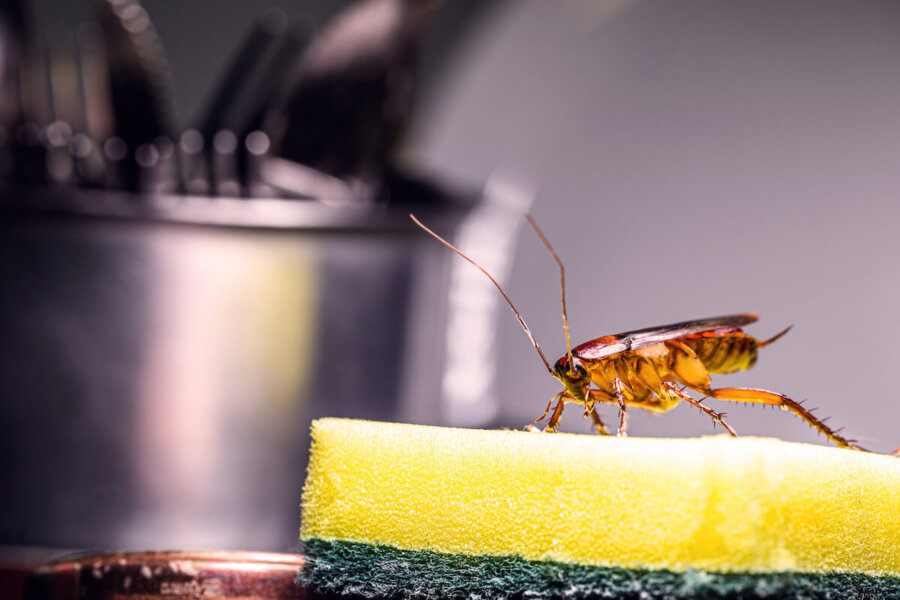
They frequently move between trash, drains, sewers, pet waste, and food areas, transferring bacteria such as Salmonella and E. coli onto dishes, counters, dish racks, and stored food. They mechanically transfer bacteria across surfaces, contributing to diseases spread by pests in kitchens and food-prep areas.
Beyond bacteria, cockroaches shed body fragments, feces, and saliva that contain allergenic proteins. These proteins are a well-documented trigger for asthma attacks, chronic wheezing, increased nighttime coughing in children, and ongoing respiratory inflammation. Studies consistently show higher asthma hospitalization rates in homes with roach infestations, largely due to allergies related to pest infestations.
Even after the infestation is eliminated, allergenic proteins can remain embedded in dust and carpet fibers for months if not professionally cleaned.
Allergies Related to Pest Infestations and Asthma
Pest allergens are microscopic. Once airborne, they irritate airway linings, increase bronchial sensitivity, trigger inflammation, and narrow air passages. Pest allergens irritate the respiratory system by causing ongoing airway inflammation.
When inhaled, allergens from rodents and cockroaches trigger immune responses that narrow airways, increase mucus production, and heighten sensitivity to other irritants. For someone with asthma, this leads to more frequent attacks, increased rescue inhaler use, nighttime symptoms, increased ER visits, and increased reliance on medication. Long-term exposure can worsen asthma control and reduce lung function over time.
In many homes, allergies related to pest infestations quietly worsen asthma long before anyone connects the dots.
Children are particularly vulnerable because their lungs and immune systems are still developing, they breathe closer to the floor where allergen concentrations are highest, and they spend more time indoors.
Hidden Pest Control Health Risks at Home
Many homeowners assume store-bought pesticides are harmless if sold over the counter. That’s not always true. Hidden pest control health risks often come from how pest control is performed, not from professional treatment itself.
Over-application is common. More spray does not equal more effectiveness. It increases surface residue, airborne particles, and skin exposure. Repeated use of sprays instead of targeted treatments, especially indoors, can lead to residue buildup on surfaces frequently touched by children and pets.
Mixing products can create harmful reactions or increase toxicity.
Indoor foggers (“bug bombs”) spread pesticide throughout the entire airspace and settle on toys, bedding, and dishes, yet rarely reach hidden nesting sites.
Poor ventilation during and after treatment allows chemical vapors to linger, especially in winter.
Chronic low-level exposure to pesticides can contribute to headaches, skin irritation, respiratory symptoms, and indoor air contamination, particularly when DIY applications are repeated in kitchens and along baseboards without addressing the underlying pest source. These long-term pest control health risks are often overlooked compared to visible infestations.
The irony? Improper pest control can sometimes pose greater health risks than the pests themselves.
When Pest Problems and Pest Control Health Risks Become Serious
Pest issues become serious health hazards when exposure is ongoing, widespread, or combined with vulnerable occupants. Health risk escalates significantly when infants, elderly adults, or immunocompromised individuals live in the home, when there is prolonged exposure, or when DIY control methods fail repeatedly, increasing both biological contamination and pest control health risks.
They become serious when you see persistent rodent droppings or strong ammonia-like urine odors, visible nesting materials, infestation in insulation, attics, HVAC systems, or insulation, multiple cockroach sightings during the day, or recurring rodent activity. Persistent indoor ant trails, especially near food storage areas, can also signal an established colony requiring professional ant control rather than repeated DIY spraying. Daytime roach sightings usually indicate a population large enough to create ongoing contamination and allergies related to pest infestations.
Frequent asthma flare-ups, unexplained respiratory symptoms, or mold growth combined with pest presence are additional warning signs.
At this stage, both pest contamination and repeated chemical exposure can significantly affect indoor air quality and overall health.
Reducing Pest Control Health Risks and Allergies Related to Pest Infestations
The safest approach combines prevention, sanitation, and targeted treatment. Reducing health risks requires prevention, targeted control, and proper cleanup to minimize both diseases spread by pests and pest control health risks.
Focus on exclusion first. Seal cracks and entry points, install door sweeps, repair screens, and close foundation gaps. Stopping entry reduces chemical reliance and prevents pests from entering in the first place.
Eliminate moisture. Most pests need water more than food. Fix leaks, improve crawlspace ventilation, and use dehumidifiers in damp areas.
Store food correctly. Use airtight containers, clean under appliances regularly, and don’t leave pet food overnight.
Use targeted treatments, not blanket spraying. Professional rodent, cockroach, ant, and spider control strategies rely on precision placement rather than widespread indoor pesticide application, reducing unnecessary chemical exposure.
Clean allergen residue after infestation through HEPA vacuuming, damp wiping surfaces, washing fabrics, and replacing heavily contaminated insulation if necessary. Address nesting materials and contaminated insulation when needed to reduce allergies related to pest infestations.
Work with licensed professionals when infestations are moderate to severe. Professional pest management that focuses on exclusion and precision treatments reduces both pest-related contamination and unnecessary chemical exposure, helping restore healthier indoor air.
The goal isn’t just killing pests, it’s preventing diseases spread by pests, reducing pest control health risks, and restoring healthy indoor air.
 Lily James